
Entry Tips: Buying Support on Unbonded Lowcap Tokens
One way to find an on a lowcap token that hasn't bonded yet (unbonded): wait for the price to come back to , then get in. This material is summarized from a post by our friend @Seonasol, then rewritten so it's easy for beginners to follow.

What Is Support?
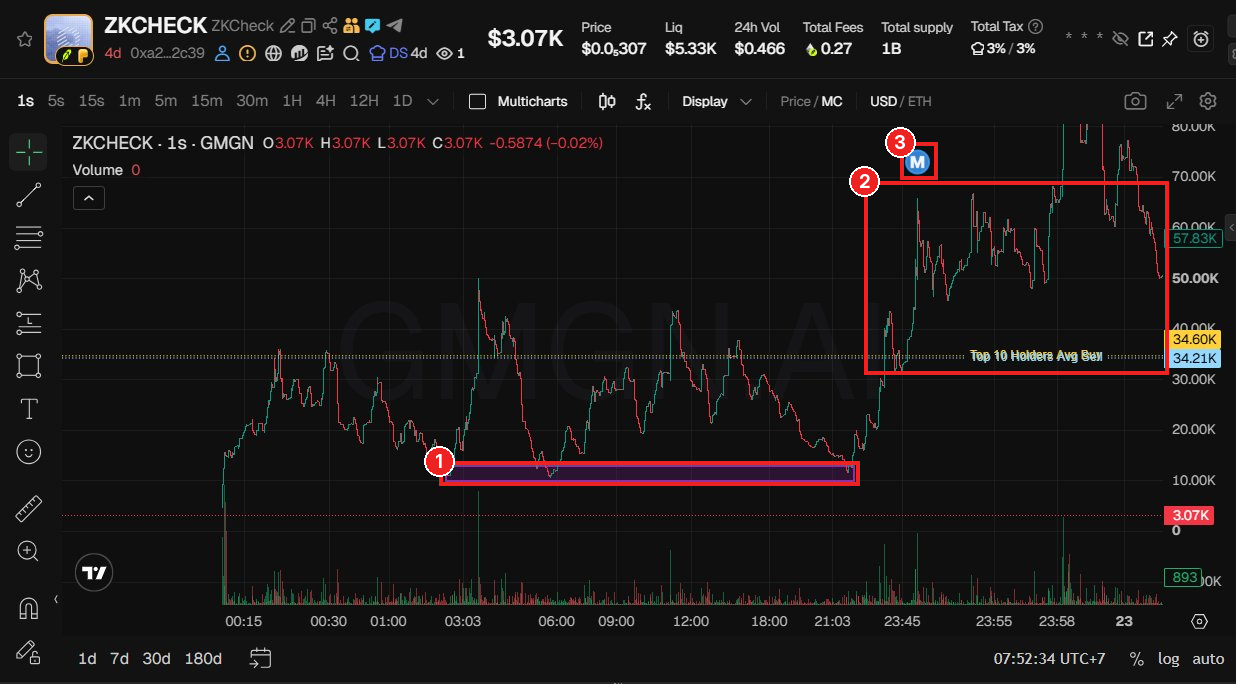
Support is a price (or ) area where the price has dropped several times and then bounced back up. Think of it as a "floor": lots of buyers wait there, so the price has a hard time breaking below it.
An easy way to spot it on the chart: look for an area that's been touched several times (at least 2) where the price always went back up.
Why Unbonded Lowcaps?
- Unbonded tokens are still on the (lessons 1.7, 2.3). Their MC is still small, so there's a lot of room to go up if the token runs.
- Seona mostly plays tokens that haven't migrated yet, rarely ones that have already bonded.
- But remember: tokens that haven't bonded may never and die along the way.
Seona's Way: Buying Support at 10K to 20K MC
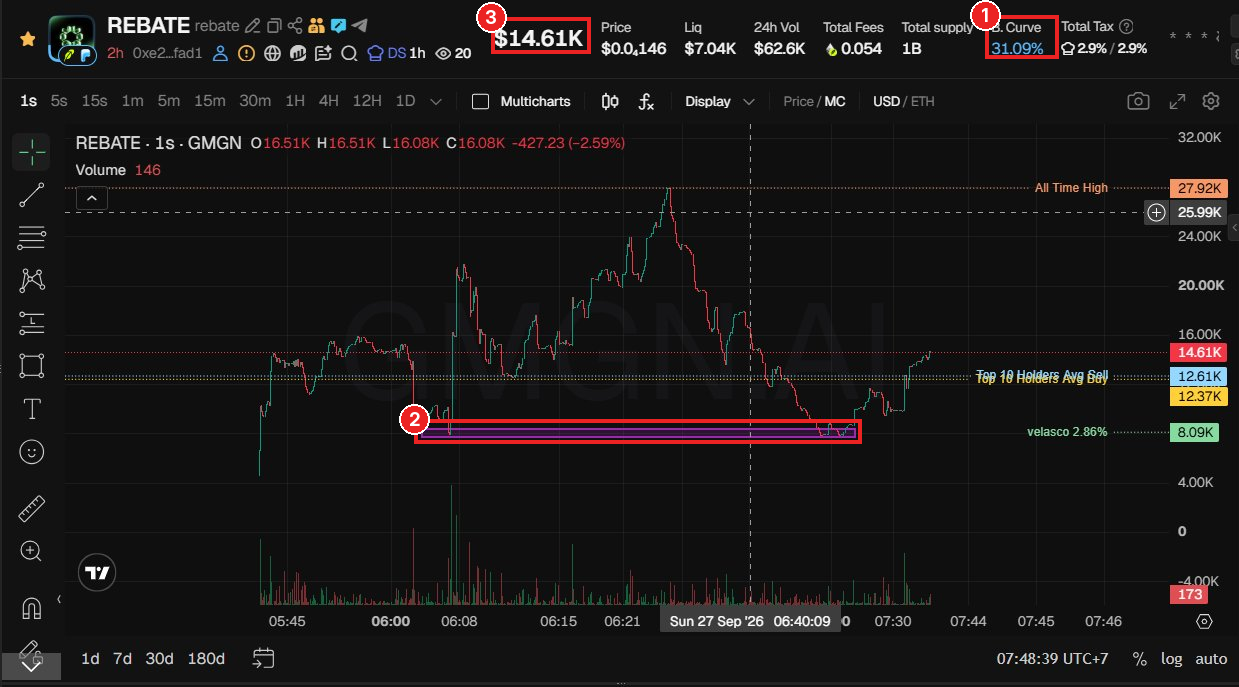
- Seona usually buys support in the 10K to 20K MC range, and the lower the better.
- This is Seona's personal approach for utility/tech tokens, not a rule. Seona says they don't know yet whether it works for .
- This approach is also not 100% reliable. Support can break at any time.
The Steps
- Check the token first using Chapter 2. Run the lesson 2.14 checklist. Support means nothing if the can mint, can be frozen, or the is piled up in one group.
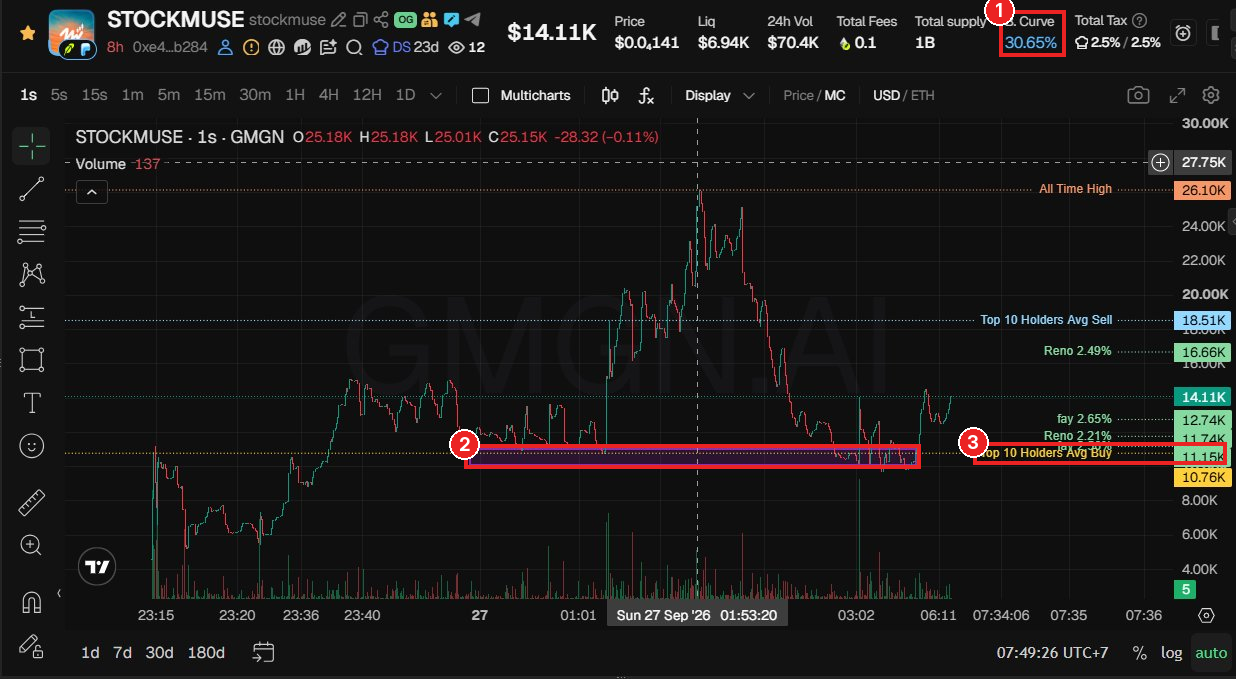
- Open the chart and find support. Look for an area that's been touched at least 2 times where the price bounced.
- Note the MC at that support area. If you're following Seona's way: focus on support at 10K to 20K MC for utility/tech tokens.
- Get in near support, with a small size. Don't chase a price that's already far above support.
- Set your level from the start. If support breaks (the price drops and doesn't come back), get out. Don't average down.
- Plan your own . Seona admits to not having a fixed TP method yet (and often selling too early). Use the TP plan from lesson 3.3.
Why Can This Reduce Your Losses?
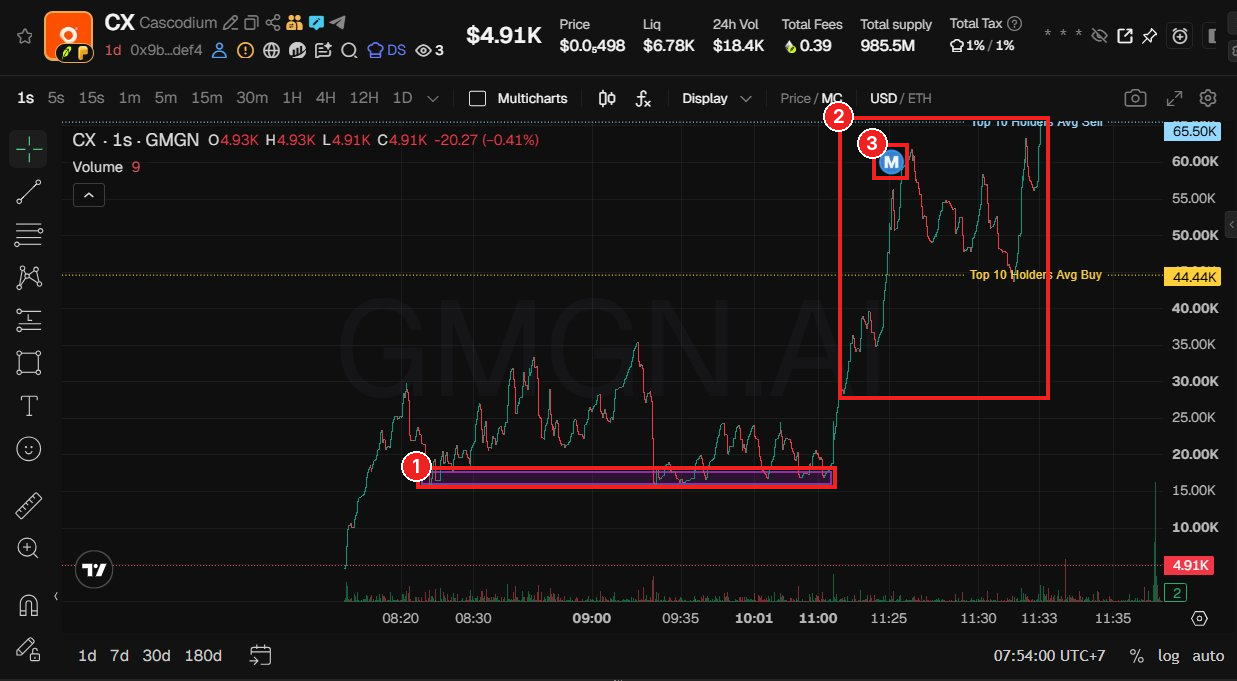
- You get in at the lowest area (support), not at the top because of .
- If support breaks and you cut loss with discipline, the loss is limited. In Seona's experience, entering at support usually means a loss of about 20 to 30% (personal experience, not a guarantee).
- Compare that with buying the top: the price can fall much further before you notice.
Limits
- Support can break because the dev , a , or simply because nobody is buying anymore (lesson 2.12).
- Lowcap tokens usually have thin : and can be large, so use small amounts.
- Bouncing twice doesn't mean it'll bounce a third time.
Summary
- Support = a price/MC area that's been touched several times (at least 2) where the price bounced back up.
- The steps: check the token using Chapter 2 → find support → get in small near support → cut loss if support breaks → plan your TP (lesson 3.3).
- 10K to 20K MC is Seona's personal approach for utility/tech tokens, not a rule, and not 100% reliable.
Common mistakes
- Chasing a price that's already far above support.
- when support breaks.
- Assuming that bouncing twice means it'll definitely bounce a third time.
Waiting patiently for support is practice in holding back greed. In the market, what we're after is the smallest possible risk, not chasing green .
Reference: @Seonasol's post (Sep 27, 2026), and its replies.
Next up, lesson 3.7: Fast Trade Tips: Finding Early Tokens on Trending 1m.
Not financial advice.
Progress is saved in this browser.