
Chapter 3 · Advanced/TipsLesson 4 of 12
3.4
Trading Journal & Loss Review
± 3 min read 8 sections 2 images
Traders who improve aren't the ones who never lose, but the ones who learn from every loss. The way to do it is to log every trade in a journal and review it regularly.

Section 1 / 8
Why does a trading journal matter?
- Our memory is biased. We easily remember profits and forget losses.
- From your notes, you can see the mistakes you keep repeating.
- You can see which strategies actually make money, not just what it feels like.
Section 2 / 8
What to log
For every trade, log at least:
Section 3 / 8
Journal tools
- Google Sheets / Excel: simple, and can calculate automatically.
- Notion: you can build a journal database right inside a page.
- Built-in features: some tools have a journal and stats, for example DryFlip for paper trading (lesson 1.2). Terminals also show a 's PnL history.
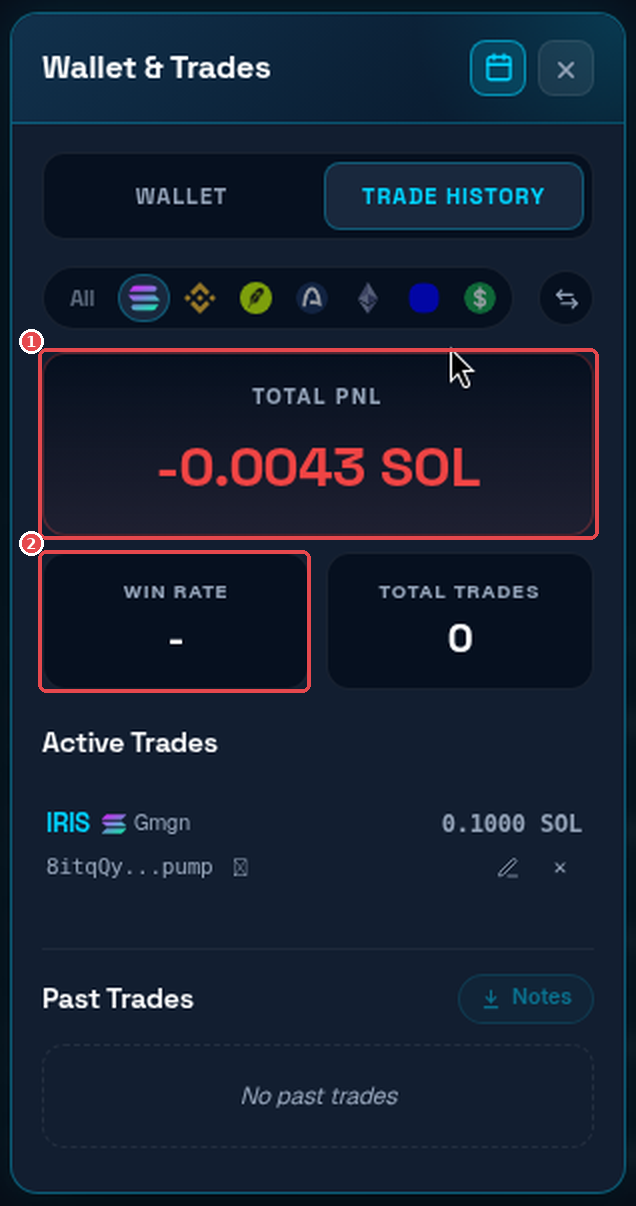
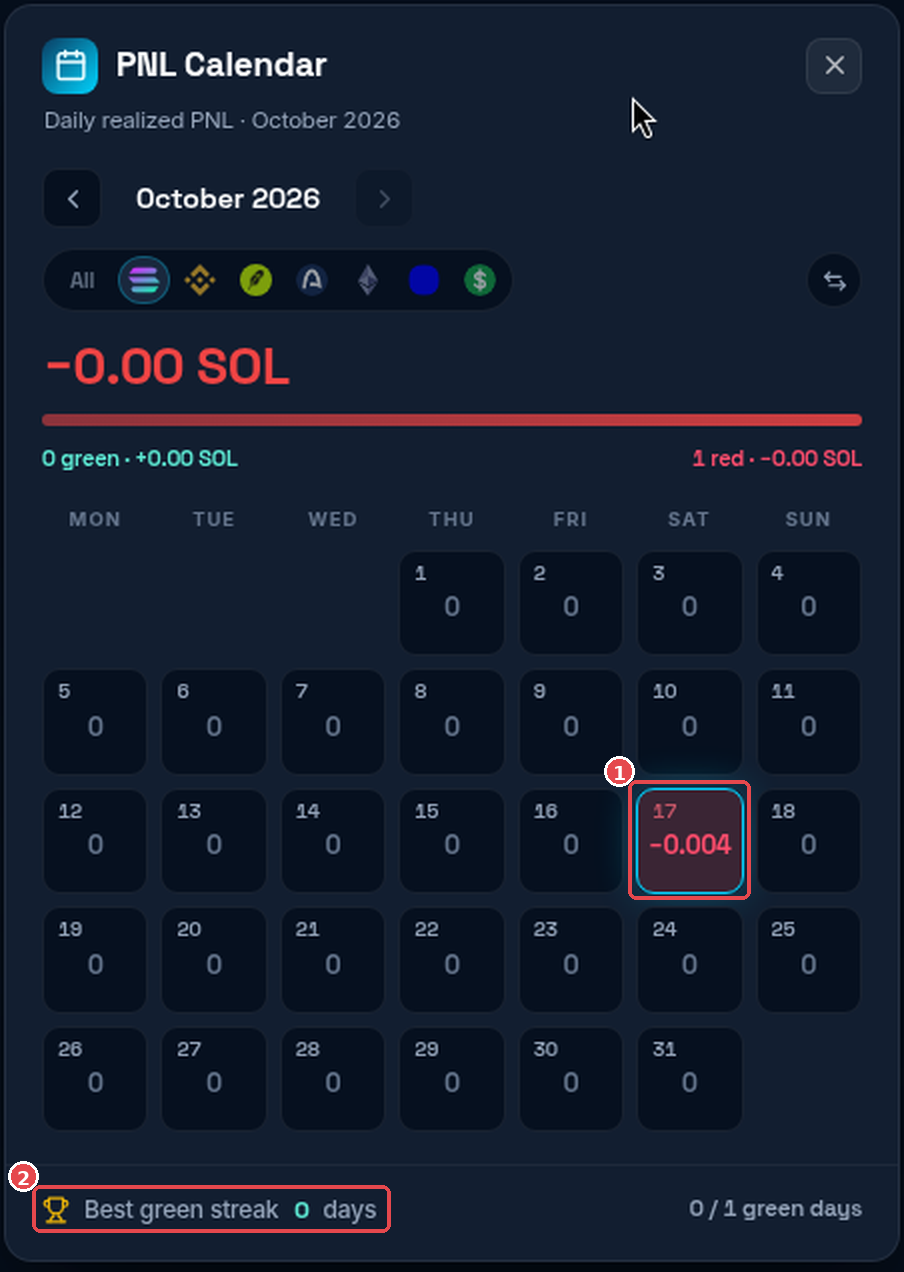
Pick whichever is easiest for you to use every day.
Section 4 / 8
How to review a loss
After every loss, ask:
Section 5 / 8
Regular reviews
Every week, look through all your notes and calculate:
- Win rate (what percentage of trades were in profit).
- Average profit vs average loss.
- The most common type of mistake.
- The times or conditions when you lose most often.
A low win rate isn't always bad if your average profit is much bigger than your average loss. Look at the big picture.
Section 6 / 8
Healthy habits
- Fill in the journal right after a trade ends, not later.
- Be honest, including about emotions and dumb mistakes.
- Change one bad habit every week.
Section 7 / 8
Dangerous habits
- Only logging profitable trades.
- Blaming the market or the without looking at your own mistakes.
- Logging but never reading it again.
Summary
Summary
Summary
- Log every trade: , /exit , position size, reason for entry, / plan, result, and emotions during the trade.
- After every loss, ask: did I follow the checklist? was it the analysis or the execution? did I enter because of ? was the position size within my rules?
- Review every week: win rate, average profit vs average loss, and the most common mistakes.
Section 8 / 8
Common mistakes
- Only logging profitable trades.
- Blaming the market or the dev without looking at your own mistakes.
- Logging but never reading it again.
A journal makes you notice when a decision was driven by greed. From there, you can keep shrinking your .
Next up, lesson 3.5: Advanced Wallet Tracking: Find Your Own Wallets.
Not financial advice.
Progress is saved in this browser.